
Ferragamo Store Handbook: Finding Your Way Through Ranges by Category
Venturing into a Ferragamo store, whether it’s a brick-and-mortar spot or an online one, can come across as wandering through an archive of Italian artisanship covering almost a hundred years. The house, commonly typed as “ferregamo” by online searchers, built its name on shoes before widening its scope to include leather goods, ready-to-wear, and accessories. These days, handbags form the core of the brand’s identity, and knowing how the lineup is structured makes the difference between an efficient shopping trip and an overwhelming scroll through hundreds of listings. This guide breaks down the categories so you know exactly where to look, whether you’re hunting for a structured top-handle bag or a relaxed, slouchy shoulder bag.
Salvatore Ferragamo, the founder, trained as a shoemaker in Naples before relocating to the United States and eventually returning to Florence to establish his atelier in 1927. That heritage of anatomical precision and construction quality carries into every bag category the brand produces now. Knowing this backstory helps explain why certain silhouettes recur across seasons rather than disappearing after one collection cycle.
In What Way the Ferragamo Shop Is Laid Out by Category
Across both digital and physical Ferragamo retail formats, handbags are generally organized into a handful of core groupings: top-handle bags, shoulder bags, crossbody styles, totes, and clutches. Each of these segments typically house several hallmark silhouettes that get reissued in updated colors or textures each season instead of being fully swapped out. This structure favors shoppers who take time to learn the familiar naming patterns, as a “new” seasonal drop frequently turns out to be a recognizable shape in revised material or hardware finishes.
Searching by category as opposed to by trend roundup typically yield better results. A shopper hunting for a office-suitable bag should kick things off in top-handle-style and structured tote areas, while whoever is designer fashion assembling an evening wardrobe belongs in the clutch-bag and mini-bag clusters. Sorting by category first, then by size and hardware detailing, cuts down the time spent looking substantially compared to scrolling through an undifferentiated “new arrivals” page.
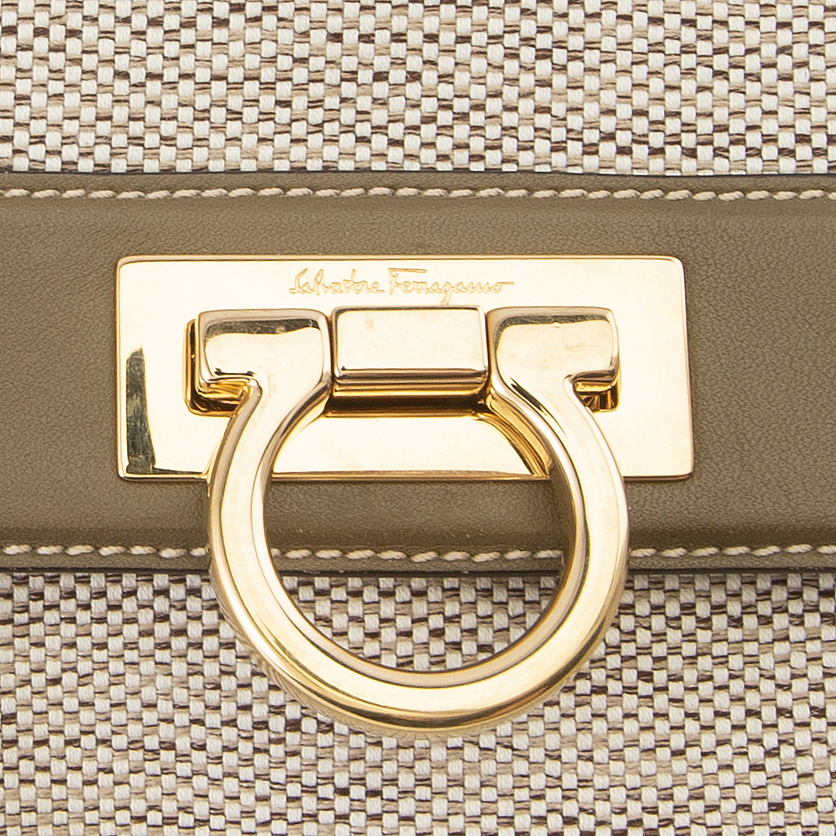
Color choices together with hardware details also influence how the store categorizes merchandise. The Gancini clasp, the clasp shaped like an interlocking horseshoe, appears across virtually every product line and functions as a common design thread. Shoppers new to the brand should recognize this hardware as a quick visual cue for authenticity and collection lineage, since it appears on bags from the 1970s archive reissues as well as current-season releases.
Structured Handbags paired with Top-Handle Silhouettes
The top-handle category holds some of the most iconic bags available today. These architectural bags typically use a more angular shape, combined with a one sturdy top handle and, sometimes, a removable shoulder strap to widen styling options. Designed for shoppers wanting one bag that carries them from office to dinner, these pieces skip the need for a mid-day swap.
Boxy-shaped bags in this category tend to keep their form over long-term handling, owing directly to the leather-goods construction techniques the house has honed since its early decades. Shoppers investigating the most sought-after Ferragamo bags for long-term investment frequently gravitate toward this grouping because the forms photograph consistently and withstand the sagging that looser, more relaxed bags sometimes acquire.
In evaluating top-handle styles, take note of the internal layout. A number of structured styles come with a single open compartment, whereas others include zip-closed sections ideal for holding a tablet or thin folder alongside everyday items. This detail outweighs color choice for anyone using the bag as a genuine daily-carry piece rather than an occasional accessory.
Shoulder-Style Bags and Daily Carry
Shoulder bags occupy the largest share of Ferragamo’s handbag output, and for good reason: they suit the broadest spread of body types, outfits, and everyday schedules. This category ranges from smaller silhouettes meant for carrying just the basics to more substantial shapes that function as a substitute for a small tote.
Buyers looking for a Salvatore bag that adapts to different seasons often settle here, since shoulder styles transition smoothly between both relaxed and dressier outfits. A canvas-strap shoulder bag comes across differently from one on a chain strap, and the shop typically lets you filter by strap material, which speeds up decision-making considerably.
Weight balance is another factor worth noting. A shoulder bag loaded with a wallet, phone, keys, and cosmetics case sits differently depending on strap width and padding. Wider, flatter straps distribute weight more evenly across the shoulder, which counts for anyone carrying a bag for eight or more hours during a workday.
Cross-Body and Small Bags
The cross-body and small-bag segment has grown substantially over the past several style seasons as hands-free carrying became a more widespread industry shift rather than a small niche interest. Ferragamo’s offerings here skew toward petite shapes with straps that adjust long enough to be worn crossbody or adjusted shorter to sit at the hip.
These petite bags often function as an starting point for shoppers discovering Salvatore Ferragamo bags for the first time, since small-format designs commonly occupy a gentler price tier than larger top-handle or tote styles. That approachability makes this segment a frequent entry point for anyone building toward a larger collection over time.
Shoppers are often surprised by how much practicality varies in this category. Some mini bags accommodate only a phone, cards, and lip product, while others include enough internal space for a compact wallet and sunglasses case. Checking the interior measurements on each product listing helps avoid the frequent letdown of a striking bag that simply fails to fit everyday essentials.
Totes and Bags for Work
Tote-style bags fill out the category list and attract shoppers who require maximum capacity without sacrificing the refinement linked to the Ferragamo name. This category features both softer, unstructured totes and more structured versions with reinforced bases that stand upright when placed down.
For professionals traveling to work with a laptop, the structured tote subcategory generally beats softer, slouchy versions, since rigid side panels shield electronics better than pliable leather that shifts about throughout the day. Those comparing the best Salvatore Ferragamo bags for office use should give preference to this subcategory over shoulder bags or clutch bags.
Interior organization once more sets apart strong options from mediocre ones. A tote with a zip-top closure shields what’s inside during a wet commute more effectively than an open-top style, even if the unzipped design seems more refined sitting on a shelf or in promotional photography.
Comparing the Categories
The comparison below sums up how each category serves distinct shopping goals, giving a quick reference point before getting into individual product listings on the Ferragamo shop.
| Category | Best Suited To | Usual Strap Design | Occasion Fit |
|---|---|---|---|
| Top-Handle | Firm, structured daily use, office wear | Stiff handle, shoulder strap optional | Office, dinner outings, travel |
| Shoulder-Style Bags | Flexible daily use | Shoulder strap, adjustable or fixed | Casual to semi-formal |
| Crossbody/Mini | Minimal essentials, hands-free use | Adjustable long-length strap | Quick errands, evening outings |
| Tote Bags | Top capacity, daily commuting | Two top handles, occasionally with a strap | Work, trips, routine errands |
| Clutches | Formal outings, pared-down carry | None or detachable wristlet strap | Evening, formal occasions |
This overview should act as a starting filter rather than a final verdict, since one’s own lifestyle and gaps in the wardrobe outweigh any general ranking of categories.
Mapping Out a Ferragamo Bags Overview Ahead of Your Purchase
Before committing to a purchase, it is worthwhile to build a individual Ferragamo bags overview based on your existing wardrobe rather than whatever’s on-trend. A person who already has several structured, top-handle styles from other brands may get more wardrobe mileage from a crossbody or tote instead of doubling up on a style they already possess.
Availability by season also influences the buying experience. Some colorways or leather finishes sell through quickly, especially around gift-giving periods late in the year, so reviewing the shop’s color and size filters before the season peaks increases the odds of locating a exact pairing in stock. Delaying the decision often means accepting whatever’s left rather than the precise item first intended.
Setting new releases side by side with reissued archive pieces is another useful step. Ferragamo regularly returns to past decades for design inspiration, and these revived silhouettes sometimes appear alongside completely new shapes in the same category page. Looking closely at product descriptions reveals which bags are heritage-inspired reissues and which are fresh arrivals to the lineup this year.
Wrapping Up: Shopping by Category
The whole shopping process becomes faster and more satisfying once the Ferragamo shop is treated as a collection of individually defined category systems instead of one undifferentiated collection. Whether one’s purpose is identifying the one standout Ferragamo bag for a pared-down wardrobe or weighing up a handful of top Ferragamo bags across the various categories before settling on a single choice, leading with structure, strap design, and use case significantly narrows the options.
Buyers who spend the extra few minutes to filter by category, study the inside sizing specifics, and compare the finish of the hardware typically end up with a bag that proves its worth in everyday use rather than sitting unused after the first few wears. That practical approach, rather than simply chasing whatever is newest, is what turns a single purchase into a genuinely long-term addition to a wardrobe anchored in Salvatore Ferragamo’s founding standard of construction and craft.